
The Clutter Wars: How My ADHD Brain Taught Me to Fight Chaos (One Thing at a Time)
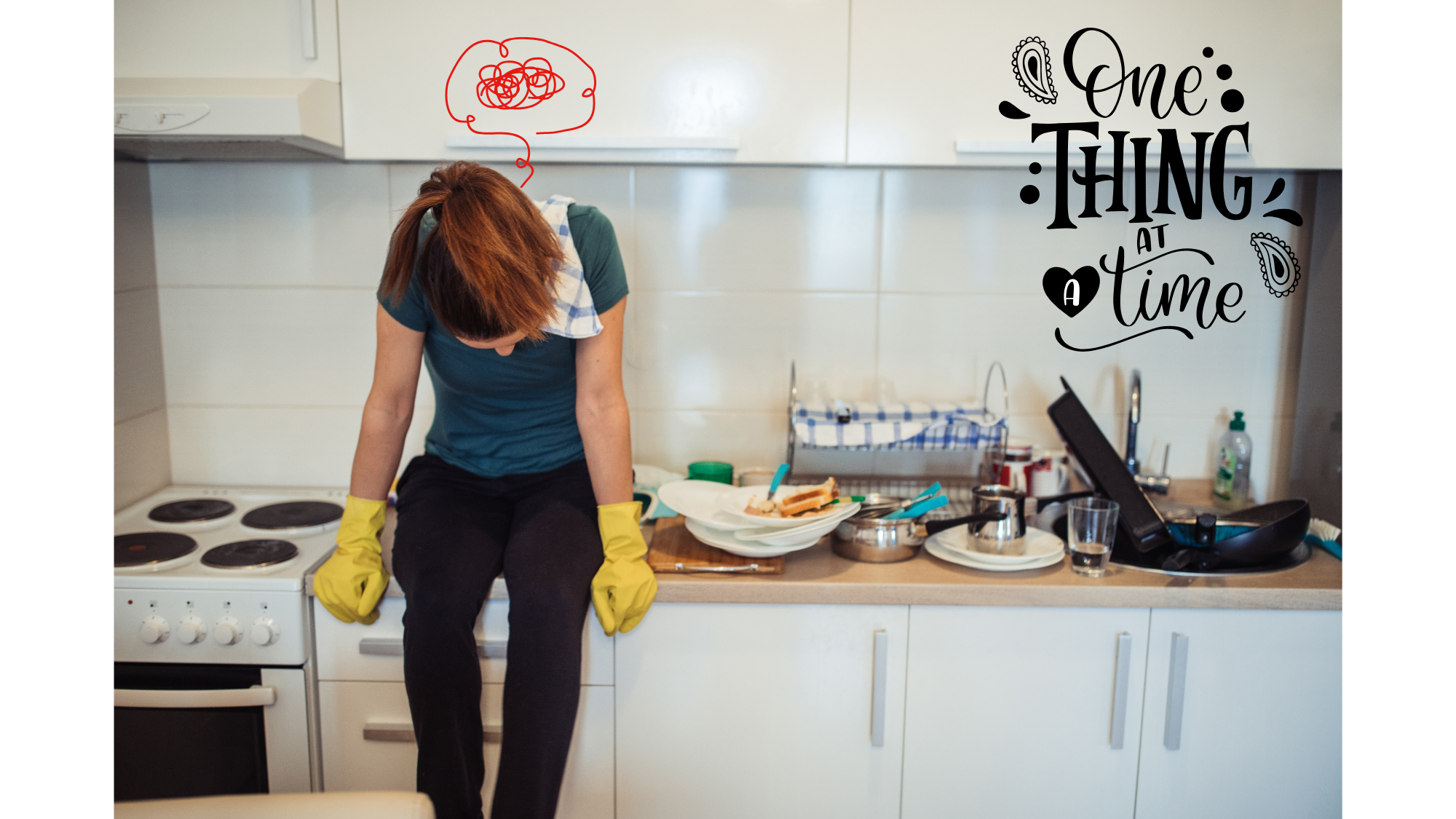
I keep a minimalist house, but not because I’m some zen lifestyle guru who found enlightenment through Marie Kondo. I keep a minimalist home because clutter can literally break my brain.
I can feel the chaos building in my head when I’m surrounded by mess. It starts as a low hum of anxiety, then grows into this overwhelming static that makes thinking impossible. Eventually, I just shut down completely. And when you shut down, guess what happens? More clutter builds. More overwhelm, more shutdown. You get the picture.
It took me years to understand this wasn’t a character flaw. It was my ADHD brain trying to process too much visual information and giving up.
The Kitchen Counter Principle (My Non-Negotiable)
My kitchen sides are always kept clear. Always. Because I’ve learned that as soon as one thing starts lying there (a letter, a coffee cup, someone’s keys), it all slowly builds up like sediment. One thing becomes three things becomes “I can’t even look at this kitchen anymore.”
When it does happen (and it does, because I’m human), I revert to what I call small wins tactics. I tell myself, “I am only going to empty the dishwasher. That’s all I have to do today.”
Then something magical happens. Emptying the dishwasher leads to “OK, I can fill it now and clear the sink.” Clearing the sink leads to wanting to wipe the sides. Wiping the sides leads to putting things back in their proper place. Before I know it, I have a clean kitchen.
But here’s the thing nobody talks about: this mental gymnastics is exhausting. Always talking yourself through every task, pet-talking yourself. “Well, you’ve come this far, just do that little bit. Oh, now you might as well do the next bit” until the dopamine runs out.
The Great Pantry Disaster (And What It Taught Me)
Picture this: I’ve got a burst of motivation and decide to clean out the pantry. I empty everything (EVERYTHING) onto the kitchen counter and floor. I clean the shelves, I’m feeling productive, I’m winning at life.
And then… nothing. The motivation just vanishes. The dopamine crash hits, and I’m standing in a kitchen covered in tins and packets, completely unable to find the will to put it all back. It’s as if my brain just shut off mid-task.
I’ve learned to change tactics. I no longer empty entire cupboards. I do it shelf by shelf now. Clear shelf, wipe, sort, return goods. Next shelf. And so on.
Why does this work? Two reasons:
- It stops the overwhelm of having everything everywhere at once
- If the crash happens, I can stop, and the place will still be clean. I can pick up where I left off, usually about three weeks, when my brain decides to cooperate again.
The Dopamine Rush Discovery
Here’s something I’ve noticed: once I get past the start, a pleasure rush often kicks in. Knowing this makes it slightly easier to force that initial push. It’s like my brain goes from “absolutely not” to “actually, this feels quite good” to “let’s clean the entire house RIGHT NOW.”
The trick is learning to ride that wave without burning out. Sometimes I’ll be deep in a cleaning frenzy and think, “I should organise the linen cupboard too!” No. Stop. The dopamine will run out, and you’ll be left with three half-finished projects and that familiar shutdown feeling.
When Creative Projects Become Chaos Bombs
The worst clutter episodes happen when I have a creative project. I’ll pull everything out (fabric, paints, papers, tools) and surround myself with the mess for days. It’s necessary for the creative process, but it’s also kryptonite for my ADHD brain.
The solution? Time limits and designated project zones. The dining table can be chaotic for up to three days (ok weeks). After that, everything returns to its original location, regardless of whether the project is finished or not. My brain needs the visual calm more than my creativity needs the spread-out materials, and if the project is not finished by then, it isn’t going to get finished anytime soon (unless there is a deadline, in which case I would have finished ages ago, because we love a challenge).
The “Just This Corner” Strategy
When overwhelm hits and everything feels impossible, I shrink my world down to the tiniest possible space. “I will just tidy this corner.” Not the room, not even the desk. Just this one corner.
Usually, that leads to “Well, I might as well do this bit too,” and before I know it, I’ve cleaned the whole room. But the secret is genuinely meaning it when you say “just this corner.” Your brain needs to believe the commitment is small enough to be manageable.
What the Shutdown Actually Feels Like
Nobody talks about what the actual shutdown feels like. It’s not laziness. It’s not a lack of motivation. It’s like your brain just… stops. You can see what needs to be done, you know how to do it, but there’s an invisible barrier between you and taking action.
Sometimes I’ll stand in a messy room for ten minutes, just looking at it, unable to choose where to start. Everything feels equally urgent and equally impossible. That’s when I know I need to go microscopic. Literally pick one object and move it to where it belongs. Just one.
The Exhausting Mental Load
The worst part isn’t the clutter itself. It’s the constant mental negotiation. Every single task requires a conversation with yourself:
“OK, you need to deal with that pile of laundry.” “But it’s so big.” “Just move it to the bedroom.” “But then the bedroom will be messy.” “Fine, just put one load in the machine.” “But then you’ll have to remember to move it to the dryer.” “Just do the one thing. The one thing.”
By the time you’ve had this conversation, you could have done the task three times over. But that’s how the ADHD brain works. Everything needs to be negotiated.
Living in Survival Mode
I’ve realised I’m constantly in damage limitation mode. Not because I want to be, but because that’s what works with my brain. Clear surfaces aren’t a lifestyle choice. They’re a necessity for mental survival.
Some days, “keeping the kitchen sides clear” is a genuine achievement. Some days, managing to do one load of washing feels like climbing Everest. And that’s OK. We’re not failing at life. We’re successfully managing a brain that processes the world in a unique way.
The small wins aren’t small at all. They’re the tiny victories that keep us functional, one corner at a time.
Now, this all sounds quite negative, and I don’t want you to go away thinking that having an ADHD brain is all struggle and mental gymnastics because it’s not.
In my next post, we’re going to talk about why this way of thinking (once you master it) is actually a superpower. When you learn to work with your ADHD brain instead of against it, something pretty amazing happens.
What are your small wins strategies? How do you manage the overwhelm when it hits? I’d love to hear what works (and what spectacularly doesn’t) for you.
Tags: #ADHD #Organisation #MentalHealth #SmallWins #MinimalistLiving #ADHDLife
Share this post: [Facebook] [Twitter] [Pinterest] [Email]
Related Posts:
- Self-Sabotage: An ADHD Survival Story (Mine)
- Coming Next: Why ADHD is Actually a Superpower
Subscribe to get new posts delivered straight to your inbox.