
Why AI is Making People with ADHD Superhuman
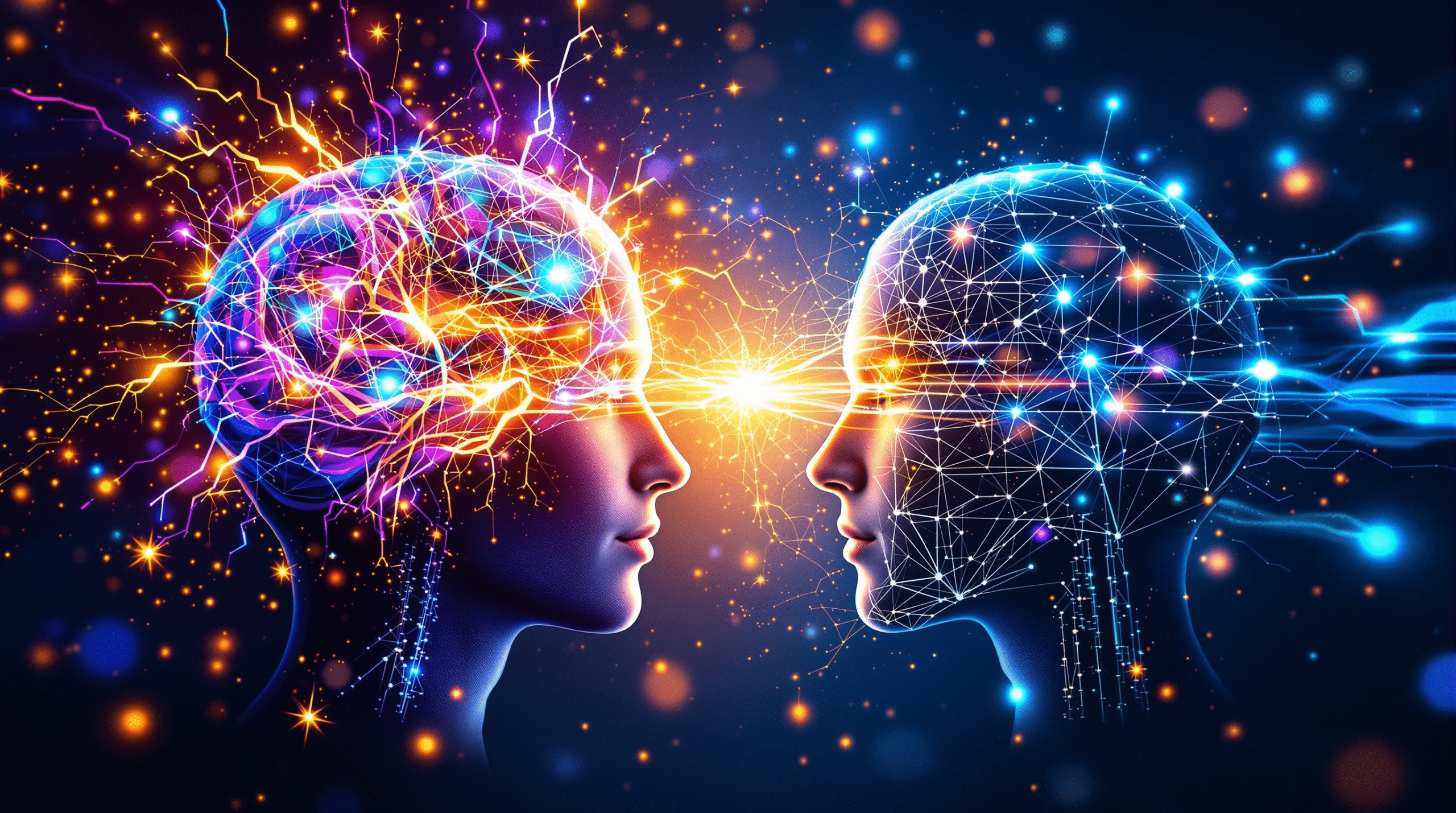
I’m super creative, but the start can sometimes be a struggle, and the finer details are often the most challenging. Well, let’s just say they’re not exactly where my ADHD brain shines. This is precisely where AI has become my secret weapon, and I suspect it’s about to make all of us with ADHD absolutely unstoppable.
Here’s what’s happening: AI is removing the barriers that have traditionally held back brains with ADHD, while amplifying our natural superpowers. We’re no longer fighting our brains. We’re augmenting them.
The Creative Catalyst: From Blank Page to Breakthrough
You know that feeling when you have a brilliant idea but can’t quite get started? Your brain sees the whole magnificent vision, but the first step feels like climbing Everest in flip-flops? AI has completely changed this for me.
I can dump my chaotic, half-formed creative ideas into ChatGPT or Claude, and it helps me untangle them into something workable, not by doing the creative work for me, but by being the bridge between my scattered, brilliant thoughts and an actual starting point.
I had this recurring problem where I’d write massive to-do lists that would overwhelm me into doing nothing. I knew I needed a different approach, but I couldn’t figure out what it was. I explained to AI: “I’m great at starting things and terrible at finishing them, plus I need variety or I get bored, but I also need routine or I forget everything.”
Within minutes, AI helped me create a flexible daily structure that works with my chaos instead of against it, with time blocks that could be adjusted, backup tasks for when I couldn’t face the main ones, and built-in variety to keep me engaged. The AI didn’t come up with the creative insight about needing both structure AND flexibility (that was my ADHD brain recognising the pattern). Still, it gave me the framework to actually implement it.
As ADHD productivity coach Brittany Smith notes, “Folks with ADHD can be too paralysed to even start a writing project. ChatGPT doesn’t get frozen by imposter syndrome or dwell on past failures. It just gets the writing done.”
The Detail Devil: Where AI Becomes Our Executive Assistant
Here’s where it gets really exciting. Those finer details that make my eyes glaze over and my brain switch off? AI absolutely loves them. It’s like having a detail-obsessed personal assistant who never gets bored or judgmental.
I can create something brilliant and innovative (that’s the ADHD superpower bit), then hand it over to AI to polish, organise, structure, and make sure all the boring-but-necessary bits are sorted.
Writing this blog, for instance, I have the ideas, the voice, and the creative insights. But formatting it properly, making sure the structure flows logically, checking that I haven’t repeated myself, ensuring the grammar is spot-on? That’s where AI steps in and handles the tedious bits that would normally derail my entire project.
Microsoft AI innovation leader Brian Krabach, who also has ADHD, describes this perfectly: “I can offload everything and later ask the AI to organise, distil, and clean it up without losing my voice.”
The Overwhelm Obliterator: Breaking Everything Down
Remember my shelf-by-shelf cupboard cleaning strategy? AI has supercharged this approach. I can describe any overwhelming project, and AI will break it down into ADHD-friendly micro-tasks automatically.
“I need to plan a holiday for four people with different interests and dietary requirements” becomes twenty small, specific tasks, each with its own little dopamine hit when completed. AI does the mental load of project management, so I can focus on the creative problem-solving and decision-making that my brain actually enjoys.
What’s revolutionary is that AI can break tasks down in ways that specifically work with ADHD brains. It understands that we need variety, quick wins, and clear stopping points. It’s like having a project manager who actually gets how we think.
The Pattern Recognition Partnership
This is where it gets properly exciting. My ADHD brain sees unexpected connections and patterns, but sometimes I can’t articulate or develop them properly. AI provides the processing power to explore these insights properly.
I’ll have one of those random lightbulb moments (you know, when you’re doing something completely unrelated and suddenly see the solution to three other problems), and I can immediately explore it with AI. It helps me trace the connections, develop the implications, and turn random insights into actionable solutions.
It’s like having a thinking partner who can keep up with my brain’s tendency to jump between ideas and see patterns everywhere.
The Hyperfocus Amplifier
When I do hit that hyperfocus zone, AI makes it even more powerful. Instead of getting derailed by small obstacles or missing details, AI can handle the background tasks while I stay focused on the main task at hand.
Yesterday at work, I was reading a case file and conducting research, preparing to write my report, when something I didn’t fully understand appeared. Instead of having to stop and research what it meant (which would have completely derailed my focus), I was able to ask AI to explain it there and then. Later, when working on the spreadsheet for this project, I didn’t have to watch YouTube tutorials on how to format something – AI provided the answer instantly.
Executive function coach Yulia Rafailova explains: “AI offers us an incredible tool to externalise our thinking, acting as a scaffold that can significantly reduce the cognitive load on our working memory.”
When I’m in hyperfocus mode, I can stay there longer because AI handles the routine cognitive tasks that would normally interrupt my flow.
The Communication Translator
One of the most game-changing aspects is how AI helps translate between my ADHD thinking style and the neurotypical world. I can draft emails, reports, or important communications in my natural, unstructured way, then ask AI to refine them, making them clear, professional, and appropriately structured.
It’s not changing my voice or ideas; it’s just translating them into formats that work better for different audiences. This has massively reduced the anxiety around professional communication and freed up mental energy for the creative work I actually enjoy.
Real-World Superpowers in Action
Here’s what this looks like in practice:
Creative Projects: I come up with innovative concepts (an ADHD superpower), and AI helps me plan and structure the execution (handling the tedious tasks).
Problem-Solving: My brain spots patterns and solutions that others miss (an ADHD advantage), and AI helps me articulate and develop these insights into practical solutions.
Learning: I dive deep into topics that fascinate me (a superpower of hyperfocus), and AI helps organise and synthesise information so I can actually apply what I’ve learned.
Communication: I have brilliant, scattered thoughts (ADHD creativity), AI helps me present them clearly and persuasively.
The Confidence Revolution
Perhaps most importantly, AI has given me confidence in my ideas again. For years, I’ve had brilliant insights but struggled to execute them properly. Now I know that whatever creative vision my ADHD brain comes up with, AI can help me bring it to life.
I’m not relying on AI to think for me. I’m using it to amplify my natural ADHD strengths whilst compensating for the traditional weaknesses. It’s like having all the benefits of my ADHD brain without the usual limitations.
What This Means for All of Us
We’re at a unique moment in history. AI tools are specifically designed to handle the things ADHD brains struggle with (detail work, organisation, starting tasks, maintaining focus on boring tasks) while leaving all the creative, innovative, and pattern-recognition work to us.
This means people with ADHD are about to have a massive advantage. Our brains are naturally suited for creative problem-solving, innovation, and identifying connections that others may miss. With AI handling the execution details, we can finally operate at full creative capacity.
The future belongs to creative thinkers, problem-solvers, and innovators. Sound familiar? That’s literally what the ADHD brain looks like when it’s working optimally.
The Reality Check
I’m not suggesting AI solves everything or that ADHD becomes easy. However, I am suggesting that for the first time, technology is working in harmony with our brains rather than against them.
The same traits that made us feel broken in traditional systems, the need for novelty, the creative leaps and the big-picture thinking, are precisely what’s needed in an AI-augmented world.
We’re not just keeping up anymore. We’re leading.
How has AI changed your ADHD experience? What creative breakthroughs have you achieved with AI assistance? I’d love to hear about your own superhuman moments.
Sources:
- Harnessing Artificial Intelligence to Live Better with ADHD – CHADD
- Embracing AI for ADHD Assistance – Brian Krabach
Tags: #ADHD #AI #Creativity #Productivity #Innovation #Neurodiversity #ADHDSuperpowers
Share this post: [Facebook] [Twitter] [Pinterest] [Email]
Related Posts:
Subscribe to get new posts delivered straight to your inbox.